
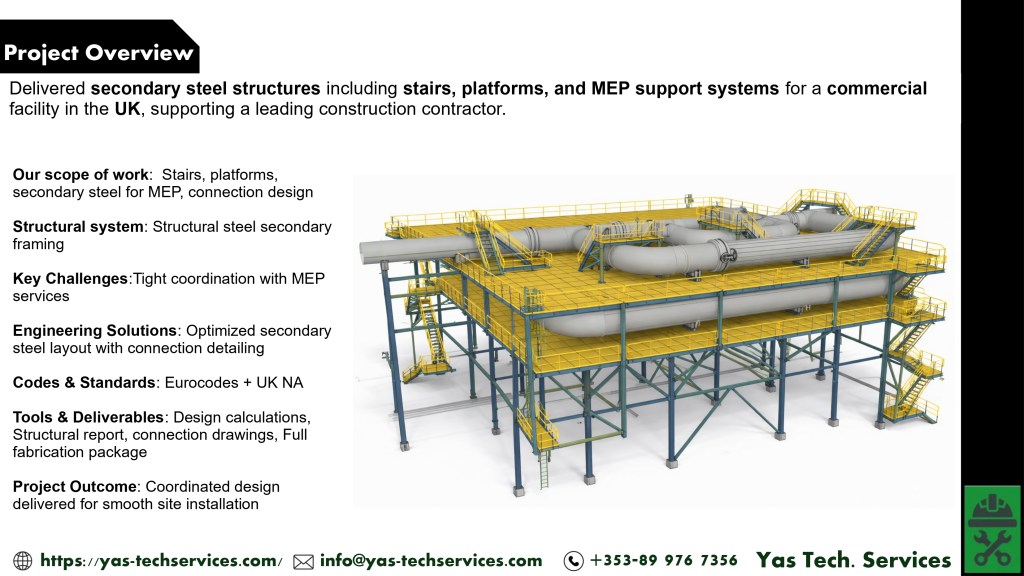
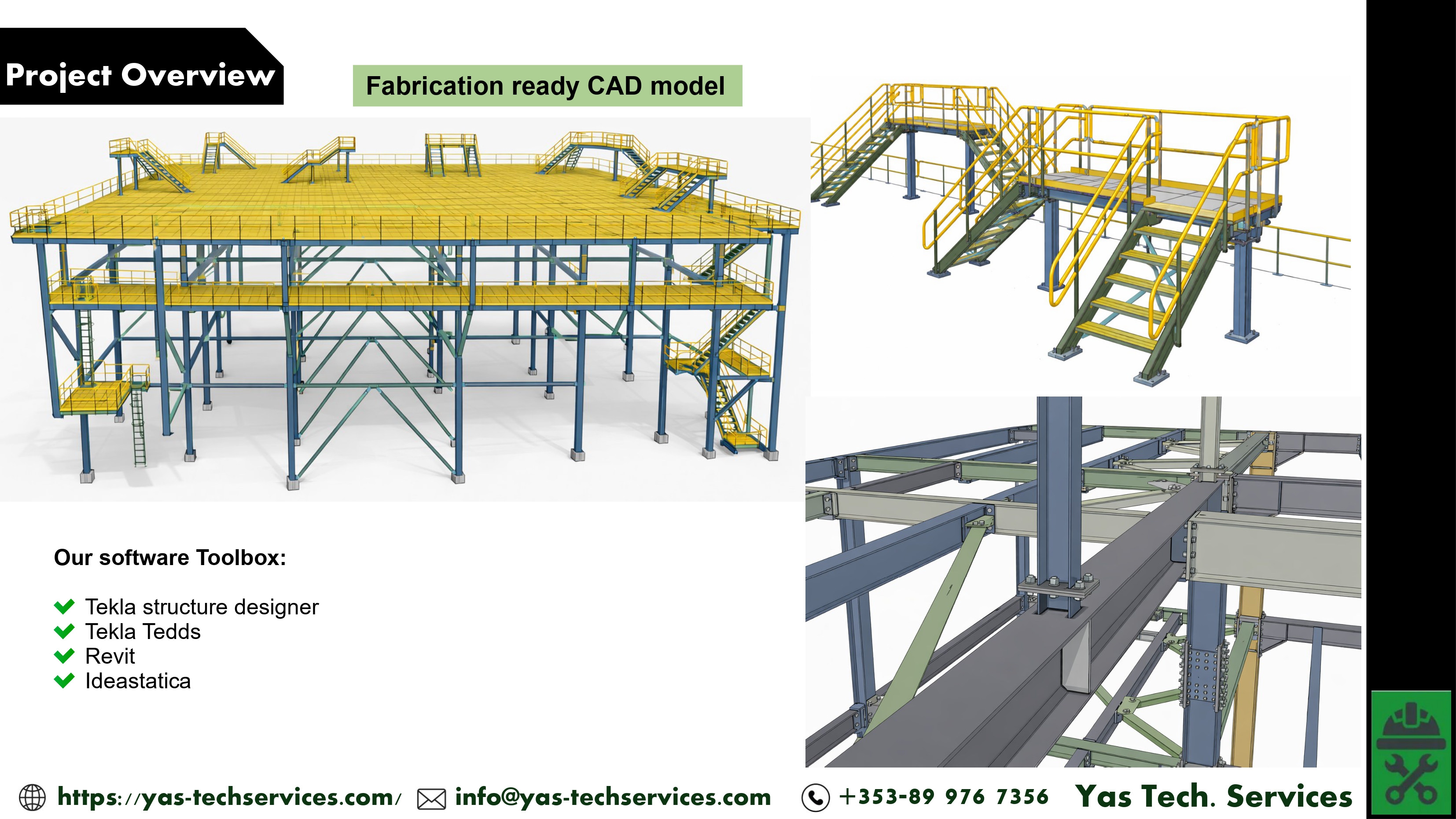
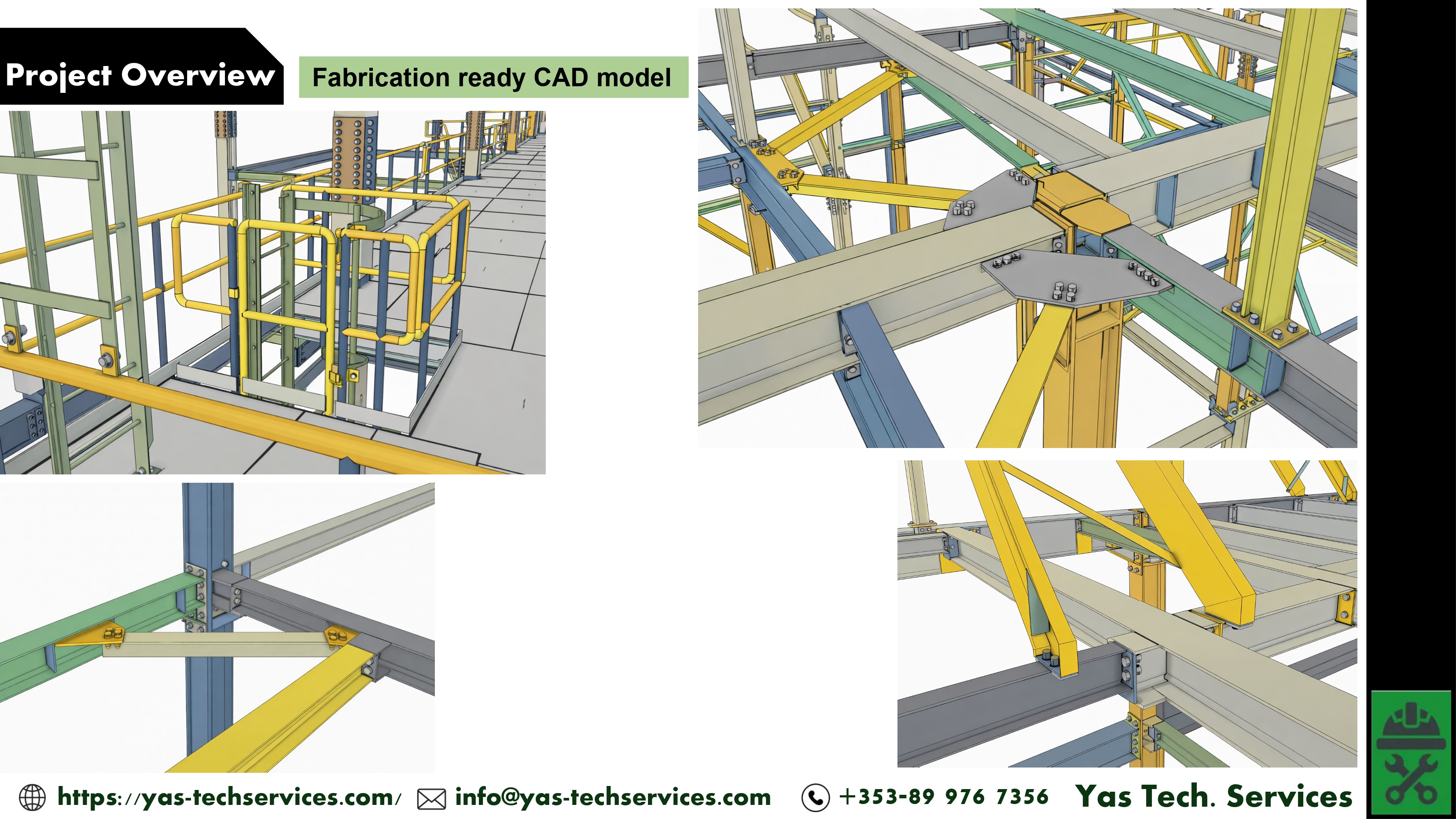
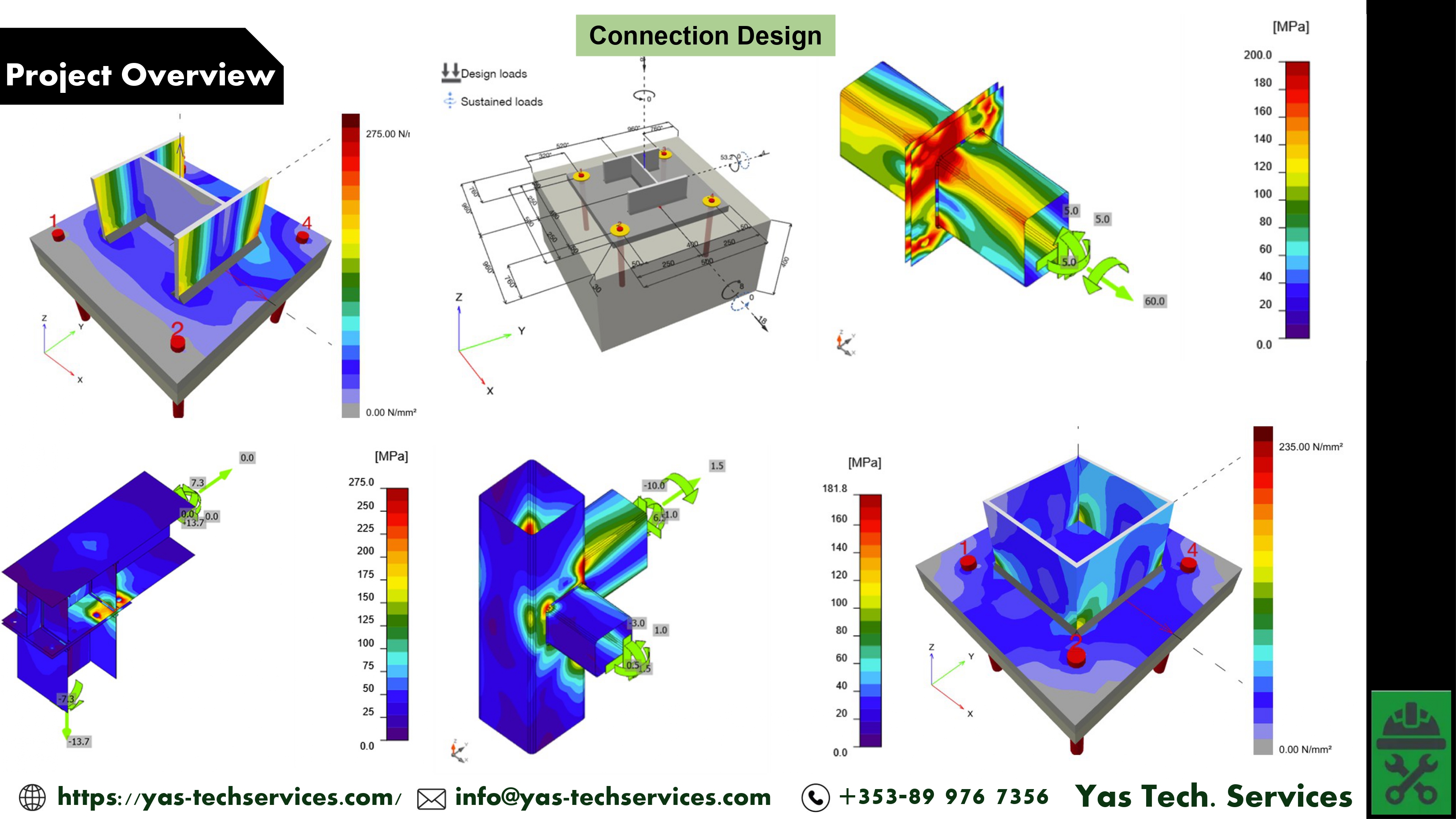
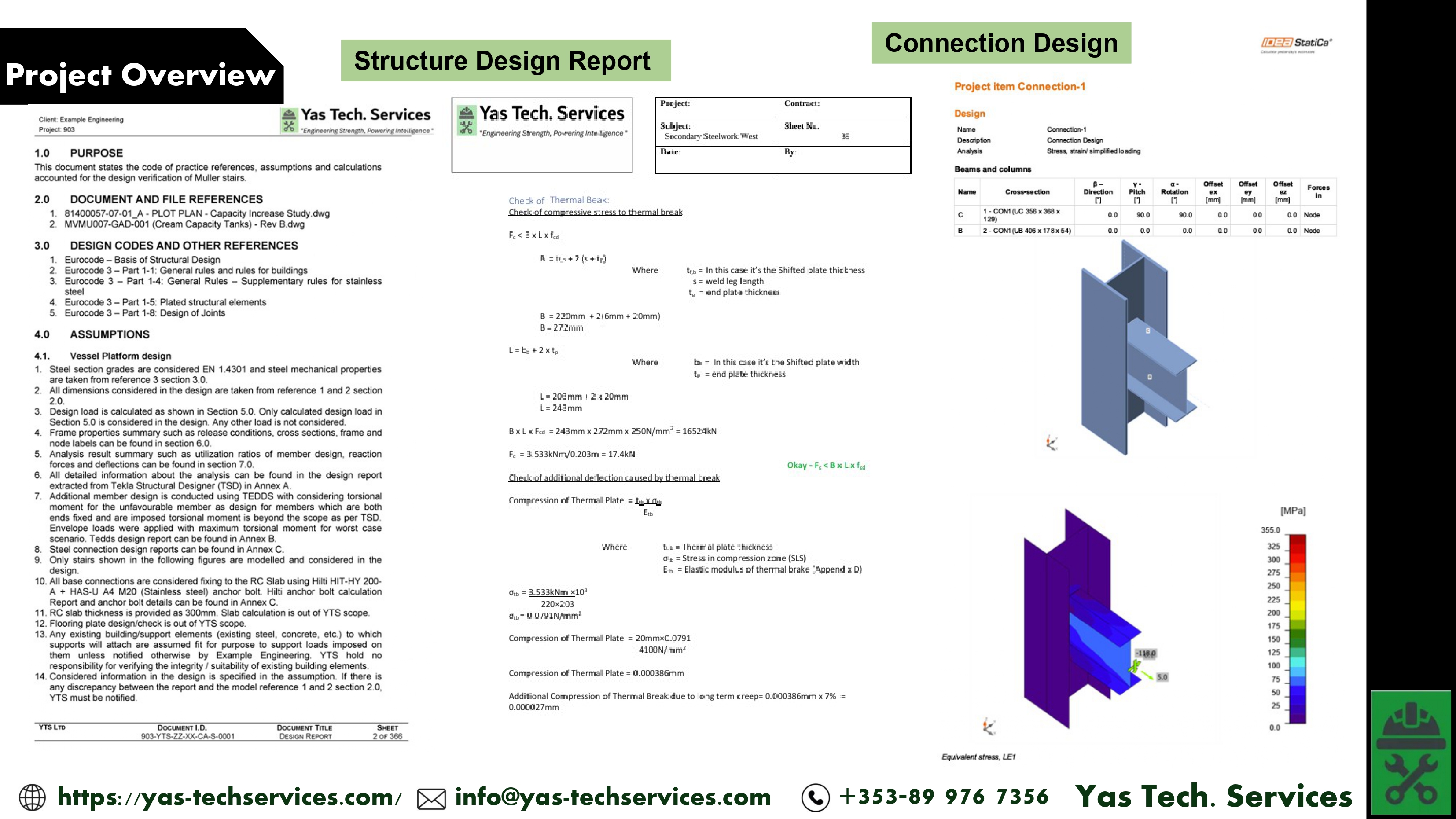
Project Snapshot
Project type: Commercial facility
Location: United Kingdom
Client type: Contractor
Structural system: Structural steel secondary framing
Software: Tekla TSD, Ideastatica, Navisworks
Scope of work: Secondary steel design for MEP support, Stairs and platforms design, Connection design and detailing
The Challenge
- The project required tight coordination between structural steel and dense MEP services.
- Secondary steel elements had to be carefully integrated within restricted ceiling and service zones.
- Any misalignment between structure and services could lead to site clashes and installation delays.
- The contractor needed a design solution that translated smoothly into fabrication and installation.
Our Engineering Approach
- We developed an optimized secondary steel layout, carefully coordinated around MEP routes and equipment.
- Connection design was carried out with a strong focus on constructability and site installation practicality.
- Load paths were assessed to ensure secondary members performed efficiently without over design.
- The design process was aligned closely with contractor sequencing and installation methodology.
- All engineering was delivered in accordance with Eurocodes and UK National Annex requirements.
Tools and Deliverables
- Structural design calculations for secondary steel and access elements.
- Detailed connection drawings suitable for fabrication and site use.
- Clear coordination information to support smooth MEP installation.
Results & Value Delivered
- Delivered a fully coordinated secondary steel design supporting clash-free MEP installation.
- Reduced site coordination issues through clear, buildable connection detailing.
- Improved installation efficiency and reduced risk of rework.
- Enabled the contractor to proceed confidently with fabrication and site execution.
Value to the Client
- Provided contractor-focused structural design support.
- Reduced coordination risk between structure and services.
- Delivered practical, installable engineering solutions—not just calculations.
- Demonstrated strong experience in UK commercial projects and regulatory compliance.

